
YouTube Shorts for Doctors: A Practical Healthcare Content Strategy
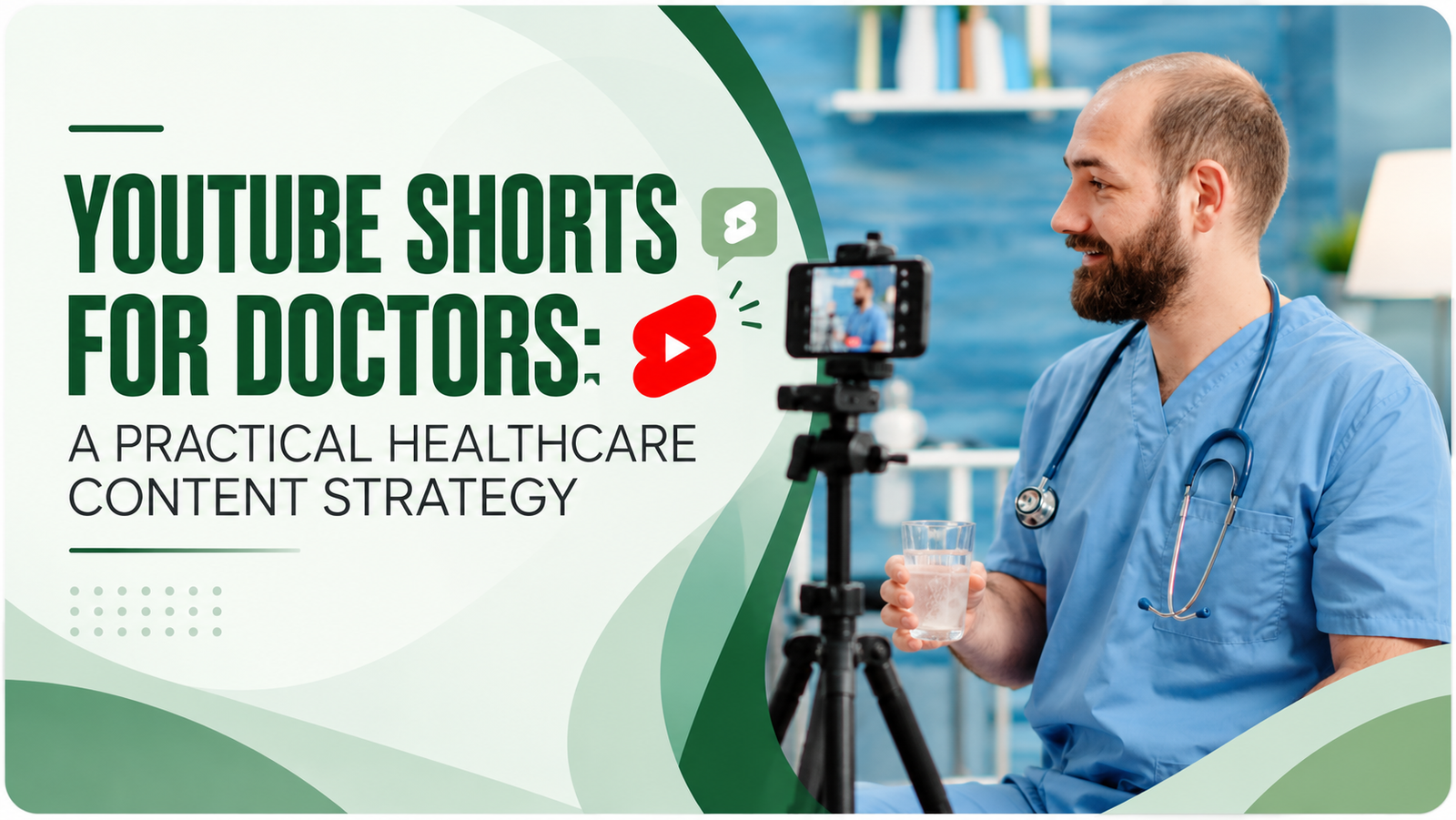
Short-form video has changed how patients first encounter healthcare providers online. Where a patient might once have searched specifically for a clinic's YouTube channel, they now discover healthcare professionals through 60-second clips that appear in feeds, in search results, and in the YouTube Shorts shelf — often before they have a specific clinical need and sometimes long before they recognise that a need is developing.
YouTube Shorts — vertical video content of up to 60 seconds — give healthcare professionals a format specifically designed for this kind of discovery. They are consumed quickly, shared easily, and indexed for search in a way that expands a channel's reach beyond its existing subscriber base. For doctors and clinics that have not yet built a large YouTube audience, Shorts are often the fastest pathway to meaningful channel growth.
But YouTube Shorts in healthcare are not simply Instagram Reels with a different upload destination. They require a specific understanding of the platform's algorithm, the viewer's mindset, and the content formats that work for healthcare audiences in a short-form context. This guide covers the practical strategy for using Shorts effectively as part of a healthcare YouTube content system.
What You'll Learn
- What YouTube Shorts are and why they serve as top-of-funnel discovery tools for healthcare practices.
- The strategic relationship between short-form reach and long-form patient trust-building.
- How to expand one clinical topic into 5 to 10 distinct, highly searchable YouTube Shorts.
- Proven hook frameworks designed to stop the scroll in the first three seconds of a healthcare video.
- Local discoverability advantages for specialist clinics in high-density medical hubs like Lajpat Nagar.
- Practical production guidelines regarding publication frequency, professional tone, and multi-platform distribution.
What Are YouTube Shorts?
YouTube Shorts are vertical video content of 60 seconds or less, filmed in a 9:16 aspect ratio and published directly to YouTube. They appear in a dedicated Shorts shelf on the YouTube homepage, in search results alongside regular video content, and in a scrollable Shorts feed that mirrors the discovery mechanism of TikTok and Instagram Reels.
Critically, YouTube Shorts are indexed and searchable in the same way as regular YouTube videos. A Short answering a specific patient question can appear in YouTube search results for that query alongside longer videos, giving it discovery reach independent of the channel's subscriber count. For a clinic building a new YouTube presence, this search indexing is one of the most valuable aspects of the format.
YouTube Shorts also contribute to channel authority. A channel that consistently publishes Shorts alongside long-form content signals consistent posting behaviour to YouTube's algorithm, which typically results in improved recommendation reach for both content types.
Why Doctors Should Consider Short-Form Video
The case for short-form video in healthcare comes down to meeting patients where they already are in their daily digital behaviour. The majority of healthcare-adjacent searches and content consumption that takes place on mobile devices happens in fragmented attention windows — a few minutes between appointments, a commute, an evening scroll. Short-form content serves these windows in a way that long-form video cannot.
A patient who would not carve out eight minutes to watch a full procedure explainer will often watch a 45-second Short answering a specific question they have been carrying. And a patient who discovers a doctor through a short, engaging educational clip often then navigates to the channel to find longer content — converting a short-form viewer into a long-form audience member through exactly the discovery pathway that YouTube Shorts are designed to create.
"Shorts don't replace long-form healthcare content. They introduce patients to it. The 60-second clip is the door; the educational library is the room."
— Prince KhatanaYouTube Shorts vs Long-Form Healthcare Videos: Understanding the Role of Each
The most effective healthcare YouTube strategies use both formats with a clear understanding of what each achieves.
| Metric / Goal | YouTube Shorts (Top-of-Funnel) | Long-Form Videos (Trust & Conversion) |
|---|---|---|
| Primary Objective | Discovery, non-subscriber reach, and rapid topical testing. | Deep trust-building, comprehensive education, and authority. |
| Ideal Length | 30 to 60 seconds optimized for fast mobile engagement. | 5 to 15 minutes providing thorough clinical explanations. |
| Viewer Intent | Quick answers to specific single questions during fragmented moments. | Detailed research before booking a major consultation or procedure. |
| Funnel Stage | Top-of-funnel awareness. | Middle-to-bottom-of-funnel decision enablement. |
How to Convert One Doctor Topic Into Multiple Shorts
One of the most efficient aspects of a well-planned YouTube Shorts strategy is that a single clinical topic can produce five to ten distinct Shorts, each addressing a different dimension of the subject.
Consider hair transplant recovery as an example topic. From this single subject, a hair transplant surgeon can produce:
- What to expect in the first 24 hours after your hair transplant.
- Why your transplanted hair falls out in weeks 3 to 5 (and why that's normal).
- Day 7 after hair transplant — what patients often miss.
- Can I wear a helmet after a hair transplant? When and how.
- The single most important thing to do in the first week after transplant.
- Hair transplant month 3 vs month 6 — realistic expectations.
Each of these is a distinct, searchable Short answering a specific patient question. None of them duplicates the others. All of them serve patients who are in different stages of researching or recovering from a procedure. And all of them can be produced from a single filming session with appropriate scripting.
30 YouTube Shorts Ideas for Healthcare Professionals
Dermatology (10)
- One thing that makes acne worse that nobody tells you.
- What your under-eye area is actually telling you.
- Why retinol makes skin worse before it gets better.
- Sunscreen in India — SPF 30 vs SPF 50 (the honest answer).
- Three ingredients that should never be mixed in skincare.
- How to tell whether a skin condition needs a doctor or a pharmacy.
- The real reason your moisturiser isn't working.
- How dermatologists actually evaluate dark spots.
- What causes sudden adult acne.
- Why skin concerns in Indian skin need different treatment than Western guidelines suggest.
Hair Transplant (8)
- How many grafts is "enough"?
- Graft survival — what actually determines it.
- Why hairline design matters more than graft count.
- The one lifestyle change that genuinely affects hair loss.
- DHT explained in 45 seconds.
- Is minoxidil permanent?
- What distinguishes a good transplant from a bad one.
- How to evaluate before-and-after results honestly.
Aesthetic Medicine (7)
- What Botox actually does (not what people think).
- How long filler genuinely lasts.
- The difference between prevention and correction in aesthetics.
- Why natural results require more skill than obvious results.
- The five questions to ask before any injectable treatment.
- What happens if you stop getting Botox.
- How to identify whether an aesthetic practitioner is qualified.
General Healthcare (5)
- How to evaluate whether health information online is credible.
- The one question to ask any doctor before a procedure.
- Why a second opinion is always appropriate and how to ask for one.
- What 'evidence-based' actually means in medicine.
- How to prepare for a specialist consultation to get the most from it.
How to Write a Hook for a Healthcare Short
The hook — the first three seconds of a Short — determines whether the viewer stops scrolling. In healthcare content, the most effective hooks follow one of four patterns:
- Direct patient concern. Open with the exact concern the patient has:
If you've noticed your hair shedding more than usual in the last few months, this is why.
- Misconception challenge. Open with a widely held belief you are about to correct:
Most people think SPF 50 gives twice the protection of SPF 30. It doesn't — here's what the numbers actually mean.
- Consequence statement. Open with the implication of not knowing something:
The most common hair transplant mistake isn't choosing the wrong clinic. It's not asking this one question beforehand.
- Specificity signal. Open with a number or specific claim that signals the content has density:
Three things that reliably make rosacea worse — and only one of them is sun exposure.
What all of these have in common: they make a specific, honest, relevant promise in the first three seconds that the patient wants to see fulfilled. Generic openings — Hi, I'm Dr. X, and today I'm going to talk about…
— lose the majority of short-form viewers before any information is delivered.
YouTube Shorts Marketing in Lajpat Nagar
Lajpat Nagar — with strong mobile-first digital behaviour across its patient demographic and significant healthcare decision-making activity among working professionals and young families in the area — is a location where short-form video content reaches patient audiences effectively. Clinics in Lajpat Nagar with active YouTube Shorts strategies consistently report improved brand recognition in the local area, driven by the algorithm-based reach that Shorts achieve beyond the clinic's existing network.
The local discoverability advantage: a healthcare Short from a Lajpat Nagar clinic, consistently published with geographically relevant context and specialty-specific content, contributes to the local SEO signals that inform both YouTube's recommendation algorithm and Google's local search indexing. Over time, this creates a compounding local visibility advantage that advertising spend alone cannot replicate.
How Dr. Graphical™ Creates YouTube Shorts for Healthcare
Dr. Graphical™ plans YouTube Shorts production as an integrated component of the broader channel strategy rather than as a separate content type. Each Shorts series is mapped to the long-form content pillars on the channel, ensuring that short-form discovery consistently connects to long-form depth and builds a coherent educational brand rather than a disconnected series of individual clips.
Shorts scripts are developed to the specific demands of the format: a hook that stops the scroll in three seconds, a delivery that maintains engagement through the full 60 seconds, and a close that gives the viewer a natural next step without a forced commercial ask. Filming can take place at our Delhi studio or on location at the clinic.
Frequently Asked Questions About YouTube Shorts for Doctors
Should healthcare Shorts be polished or authentic-feeling?
The most effective healthcare Shorts sit in the middle: professionally shot with clean audio and appropriate framing, but with the natural, direct communication style of a doctor speaking to a patient rather than performing for a camera. Over-produced Shorts that feel like advertisements lose the trust advantage of the format. Shorts that feel carelessly produced undermine the quality signal the clinic needs to establish. The production standard should say this doctor takes their communication as seriously as their clinical work.
Can the same Short be posted on both YouTube and Instagram?
Yes — vertical short-form content can be published across YouTube Shorts, Instagram Reels, and where appropriate, other short-form platforms with minimal adaptation. However, minor platform-specific adjustments improve performance: different caption styles, platform-appropriate hashtag strategies, and awareness of the slightly different algorithmic preferences of each platform. Dr. Graphical™ plans multi-platform short-form content as a single production with platform-specific adaptation built into the delivery.
How does YouTube count views on Shorts compared to regular videos?
YouTube counts a Short view differently from a regular video view — a Short view is registered after the viewer has watched at least a few seconds rather than the standard 30-second threshold for regular videos. Shorts also surface in the Shorts shelf and feed rather than primarily in subscription feeds, which means their discovery mechanism and audience reach pattern differs significantly from long-form content. Understanding these distinctions is important for interpreting channel analytics accurately.
How many Shorts per week should a healthcare channel publish?
Two to four Shorts per week is a productive range for most healthcare channels building their short-form presence. More than four risks content fatigue and can challenge quality consistency. Fewer than two limits the algorithmic momentum that consistent short-form publishing builds. The right number is the highest frequency at which quality can be genuinely maintained — never more.
Do YouTube Shorts help with Google search rankings?
YouTube Shorts appear in Google search results for relevant queries — particularly for question-based searches where a 60-second video answer is a natural match for the search intent. A Short answering is hair transplant painful?
can appear in Google search results alongside text-based answers, providing an additional search discovery pathway for the clinic's YouTube presence. This Google integration is one of the meaningful advantages YouTube Shorts have over competing short-form platforms.
About this article: This guide was produced by the Dr. Graphical™ content team based on healthcare video marketing experience, YouTube platform best practices, and publicly available industry research. Healthcare-related claims in any clinic's content should be reviewed by a qualified medical professional before publication.