

You spent years building expertise. You've seen thousands of patients. You've earned your reputation the hard way — through late nights, continuous learning, and genuine care.
But here's something most experienced doctors don't talk about openly: a patient who has never met you is already forming an opinion about you.
They're looking at your Instagram profile. Scrolling through your website. Reading your Google reviews. Watching that one reel you posted six months ago. And within a few minutes, they've decided whether to book an appointment — or quietly move on to someone else.
This isn't about vanity. It's about how trust works in the digital age. If your online presence doesn't reflect the quality of your actual work, you're losing patients before the conversation even begins.
patients research a clinic online before booking
first impressions form in seconds digitally
months to build meaningful digital trust
The Shift in Modern Patient Behaviour
Not long ago, patients relied almost entirely on word-of-mouth recommendations. A neighbour referred them to a doctor, they called the clinic, and they showed up. Trust was built in person, slowly, over multiple visits.
That model hasn't disappeared — but it's changed significantly. Today, even when someone gets a personal recommendation, the first thing they do is search online. They want to verify. They want to feel reassured. They want to see what the clinic looks like, how the doctor communicates, and whether the overall experience feels right for them.
What Patients Look For Online
When someone searches for a healthcare provider, here's what they're actually trying to understand:
- Does this doctor seem credible and knowledgeable?
- Does the clinic environment look professional and hygienic?
- How does the doctor communicate — approachable or intimidating?
- Do other patients seem satisfied?
- Does this feel like a premium, trustworthy experience?
None of these questions are answered by your medical degree alone. They're answered by your digital presence.
Why First Impressions Are Now Digital
Think about the last time you visited a new restaurant, stayed at a hotel, or hired a professional service. Chances are, you checked photos, read reviews, and browsed their social presence first. Patients behave exactly the same way with their healthcare providers.
Research consistently shows that a significant majority of patients go online before booking a healthcare appointment. For younger demographics — especially millennials and Gen Z — that number is even higher. And in urban markets across India, where healthcare options are growing rapidly, patients have more choices than ever before.
This means your digital presence is no longer a "nice to have." It's the first chapter of the patient relationship.
How Poor Presentation Weakens Premium Perception
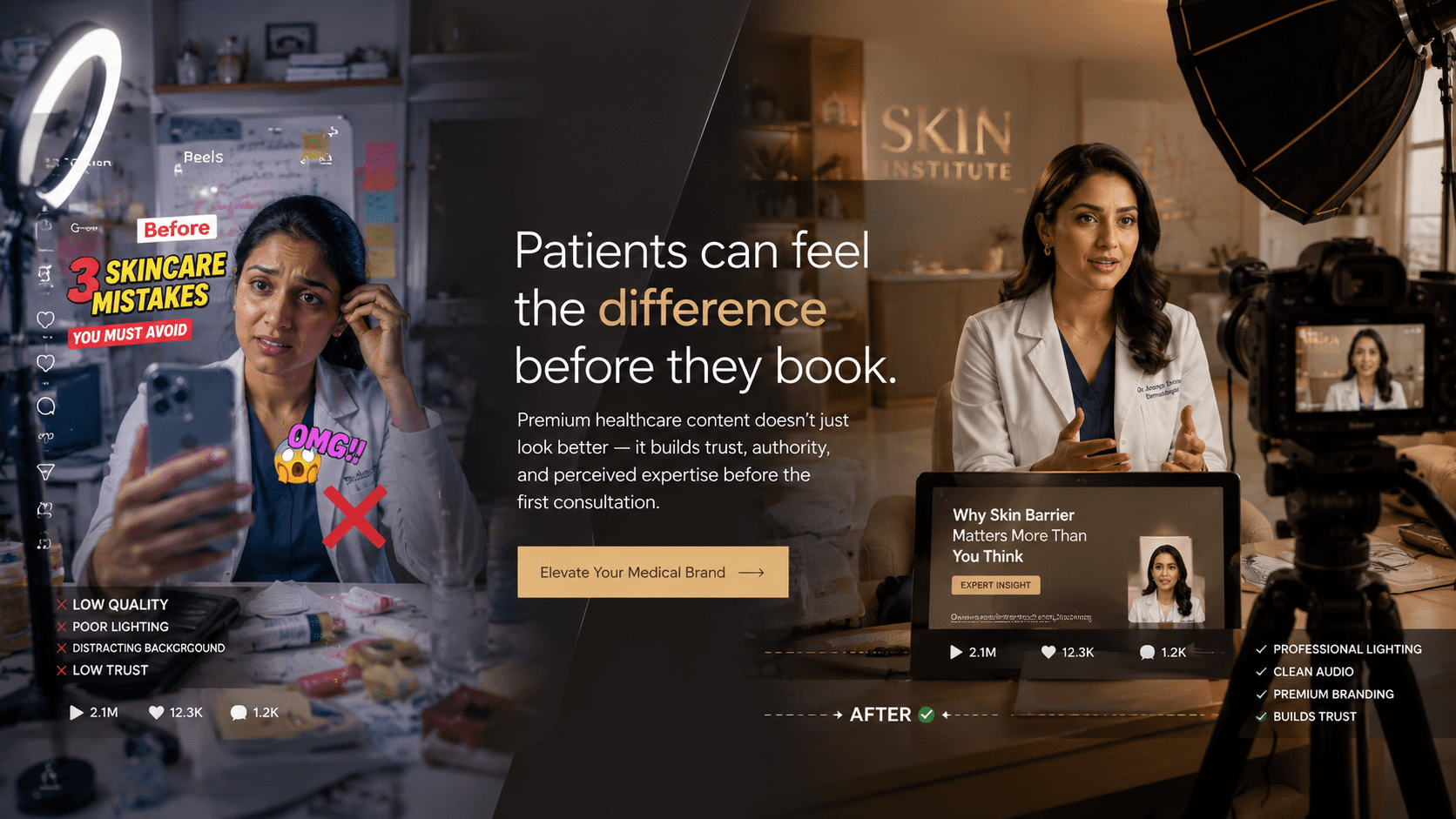
A doctor with 20 years of experience and a blurry, outdated online presence can easily lose a potential patient to a newer, less experienced doctor who simply presents better online. That's not fair. But it's reality.
Premium perception is built through consistent, high-quality communication. When your visuals, language, content, and overall digital presence feel polished and intentional, patients naturally assume your clinical care reflects the same standards.
Common Mistakes That Quietly Reduce Trust
- Low-quality images or videos
- Inconsistent posting with no clear voice or purpose
- Over-edited "viral" content that feels generic
- No educational content that demonstrates actual expertise
- Clinic interiors that look dated or poorly lit in photos
- No clear "who we are and what we do" messaging
Why Educational Content Builds Familiarity

One of the most powerful things a doctor can do online is teach. Not lecture. Not sell. Not perform. Just genuinely explain things that patients wonder about — in language that's clear, reassuring, and real.
When you share educational content consistently, patients start to feel like they know you. By the time they book an appointment, they're already comfortable with you. The trust is already half-built.
What Effective Educational Content Looks Like
- Clear explanations of common conditions in simple language
- Myth-busting content around popular misconceptions
- Walkthroughs of procedures patients feel anxious about
- Honest conversations about what results look like
- Behind-the-scenes moments that humanise the experience
The Psychology Behind Trust-Driven Healthcare Branding
Trust isn't built through one impressive post or a beautiful website alone. It's built through consistency. When patients see the same quality, tone, and values reflected across everything you publish, they stop questioning whether you're legitimate.
| What Patients See | What They Conclude |
|---|---|
| High-quality visuals | Professional, detail-oriented |
| Clear, educational content | Knowledgeable, trustworthy |
| Consistent tone and voice | Reliable, organised |
| Genuine patient testimonials | Proven results |
| Thoughtful clinic presentation | Premium care standards |
Modern Healthcare Communication as Competitive Advantage
Most healthcare providers are either not investing in their digital presence at all, or posting random content without any real strategy. That creates an enormous opportunity for the ones who take it seriously.
Expert Insight
The doctors who will dominate their markets in the next five years won't necessarily be the most technically skilled. They'll be the ones who communicate their expertise most effectively — online and offline. Digital presence is no longer separate from clinical reputation. They are the same thing.
— Prince Khatana, Founder of Dr. GraphicalCommon Mistakes to Avoid
- 1
Waiting until your presence is "perfect" before posting — consistency matters more than perfection.
- 2
Copying content styles from entertainment or fashion — healthcare communication has its own language.
- 3
Ignoring patient reviews and feedback — engagement signals matter.
- 4
Treating every post as a sales pitch — education first, trust second, patients naturally follow.
- 5
Neglecting the website — it's still the most trusted digital property you own.
Frequently Asked Questions
Conclusion
Your patients are online. They're searching, scrolling, and forming opinions long before they ever call your clinic. The question isn't whether your digital presence matters — it does, deeply. The question is whether it reflects the quality of care you actually provide.
Building a strong, consistent, and trust-driven digital presence isn't about vanity or trends. It's about ensuring that your expertise is visible, your communication is clear, and your potential patients feel confident enough to take that first step toward booking.
Healthcare communication builds trust before consultations begin — and that trust starts with everything they see about you online.